If you’ve started shopping around, you’ve probably noticed two very different options popping up. On one side, the big-name agencies with massive teams and glossy case studies. On the other, boutique marketing agencies that promise hands-on service, creativity, and a more personal experience.
So what actually happens when you hire a boutique agency? And how is it really different from working with a larger firm?
Let’s pull back the curtain.
First, a Quick Look at the Marketing Agency Landscape
Marketing agencies are not one-size-fits-all, even though some might try to sell themselves that way.
Broadly speaking, most agencies fall into two categories:
- Large or enterprise agencies with hundreds or even thousands of employees
- Boutique marketing agencies with smaller, specialized teams
Neither option is automatically better. The right choice depends on what your business actually needs and how you like to work.
What Makes a Boutique Marketing Agency Different
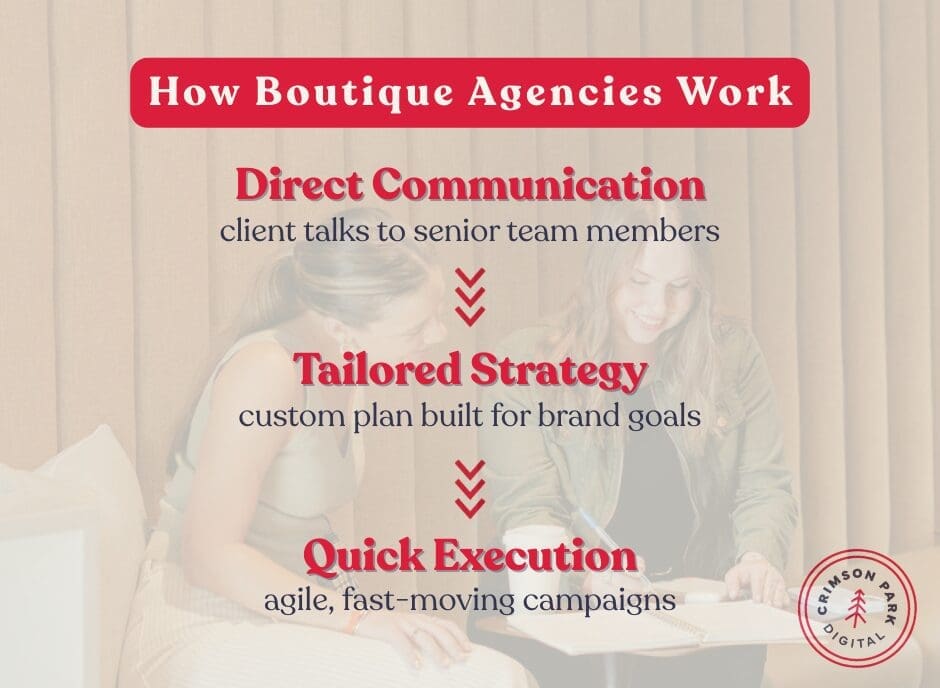
The biggest difference you’ll notice with a boutique agency is how involved they are. From day one, the relationship feels less like hiring a vendor and more like adding a strategic extension of your internal team.
Boutique agencies are intentionally smaller. That allows them to stay close to the work, the strategy, and the client.
Instead of being passed from department to department, you usually work directly with the people shaping your marketing efforts. The strategist is involved in the details. The creative team knows your goals. The account lead understands your business inside and out. The CEO knows your name and your pain points.
That closeness changes everything.
Expect a Lot More Personal Attention
Boutique agencies live by their relationships. They never treat clients like numbers.
Expect kickoff calls that go beyond surface-level questions. You’ll talk about your audience, your competitors, your growth goals, and what has or hasn’t worked in the past. The goal is context, not just deliverables.
Communication is usually more direct and less formal. You’re not filing tickets or waiting weeks for answers. You’re emailing or messaging real humans who are actively working on your account.
That level of access means fewer misunderstandings, faster decisions, and marketing that actually sounds like your brand.
Strategy Comes Before Tactics
One of the biggest misconceptions about marketing agencies is that they jump straight into execution. Post this. Launch ads. Redesign the site.
Boutique agencies tend to slow this part down on purpose.
Before anything launches, there’s a lot of thinking, questioning, and prioritizing happening behind the scenes. Strategy sets the foundation so the tactics actually work together.
This is also where boutique agencies shine. Because they are not trying to push a templated solution, the strategy is built around your business, not someone else’s.
You might see conversations around things like:
- Who your ideal customer really is, not just who you want them to be
- Where people drop off in your funnel or sales cycle
- What success should look like in six months, not just next week
Not every detail gets handed over, and that’s intentional. Execution, optimization, and refinement are where experienced agencies earn their keep.
Creativity That Feels Custom, Not Cookie Cutter
Big agencies often rely on proven frameworks and repeatable processes. That works well at scale, but it can also lead to campaigns that feel familiar.
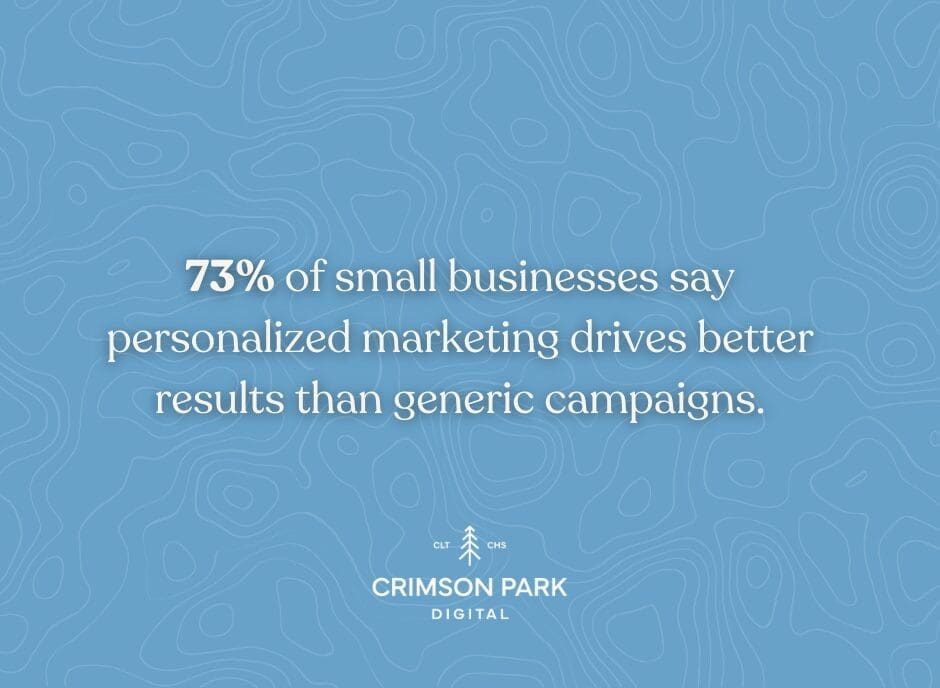
Boutique agencies have more room to experiment.
Because teams are smaller and approvals move faster, creative ideas don’t get watered down as easily. Messaging can be more brand-specific. Visuals can push boundaries a little more. Content can sound human instead of overly polished.
This is especially valuable in crowded industries (like hospitality) where standing out matters. Creative risk is easier to take when you’re not managing dozens of layers of approval.
Faster Pivots and Quicker Wins
Marketing rarely goes exactly as planned. Platforms change. Algorithms shift. Consumer behavior surprises everyone.
Boutique agencies are built to pivot.
Smaller teams mean fewer internal hurdles. If something isn’t performing, adjustments happen quickly. If a new opportunity pops up, it can be explored without weeks of meetings.
That agility often leads to quicker wins and fewer wasted dollars. Instead of sticking to a rigid plan just because it was approved months ago, boutique agencies adapt as data comes in.
A More Transparent Approach to Pricing
Boutique agencies tend to be more upfront about how pricing works. You usually know what you’re paying for, what’s included, and what’s not.
Packages are often customized based on goals, scope, and priorities rather than squeezed into a predefined tier. That flexibility can be a huge plus for growing businesses that need smart allocation instead of bloated retainers.
Large agencies may offer competitive pricing at scale, but the fee structures can be complex. Add-ons, change orders, and layered approvals can make it harder to track where your budget is going.
What Big Agencies Still Do Well
All of this said, big agencies absolutely have their place.
They offer deep benches of talent, global reach, and experience managing massive campaigns. If your business needs international rollout or media buying at scale, a large agency might be the right fit.
The tradeoff is often personalization. Smaller clients can feel lost in the shuffle, and strategy may be handled by senior leadership while execution is delegated.
So, Which One Is Right for You?
The real question isn’t boutique versus big. It’s alignment.
A boutique marketing agency is often a great fit if:
- You value collaboration and direct communication
- Your brand needs custom strategy, not a template
- You want senior-level thinking involved in the work
- Agility and creativity matter to your growth
A big agency may make more sense if:
- You need global scale and large media budgets
- Your campaigns require extensive infrastructure
- You’re comfortable navigating multiple layers of teams
The best partnerships happen when expectations, goals, and working styles align from the start.
What to Look for When Choosing a Marketing Partner
No matter the size, choosing the right agency takes a bit of homework.
Start with clarity. Know what you want help with and what success looks like. Then look for agencies that ask smart questions rather than make big promises.
Pay attention to how they communicate during the sales process. That’s often a preview of what working together will feel like.
Case studies matter, but so does chemistry. Marketing works best when there’s trust, transparency, and a shared sense of ownership.
Start Your Next Step
Hiring a boutique marketing agency isn’t about doing everything yourself or learning every tactic. It’s about partnering with a team that knows how to connect strategy, creativity, and execution in a way that fits your business.
At Crimson Park Digital, we specialize in building thoughtful, results-driven strategies without the bloat or bureaucracy. If you’re ready for a marketing partner that feels invested, collaborative, and refreshingly human, we’d love to talk.

Reach out to CPD and let’s see if we’re the right fit for your next stage of growth.