The brands winning right now are doing one thing really well: they show up everywhere people look for answers. Not just on Google, but in AI-generated responses, on TikTok, inside Reddit threads, in YouTube videos, across Pinterest boards, and across social platforms that now double as search engines.
That’s the new baseline.
So yes, generations are searching differently. But the bigger shift is this: search itself has expanded, and the way people find, trust, and choose brands looks completely different than it did even a couple of years ago.
Let’s dig into what’s actually happening.
Search Isn’t a Platform Anymore. It’s a Behavior.
We used to treat search like a destination. Open Google, type a query, click a link, done.
Now it’s more like a journey that jumps between platforms.
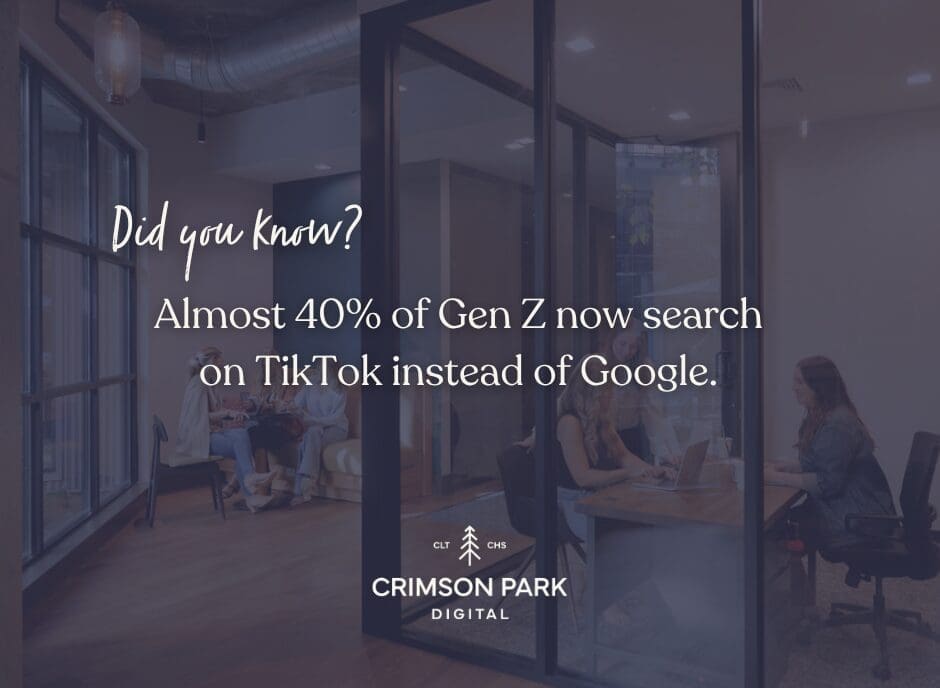
Someone might start with a TikTok video, open Google to double-check, skim a blog, pull up Reddit for real opinions, then watch a YouTube review before making a decision. In many cases, they never even click a traditional search result because an AI tool has already summarized what they needed.
That’s why the old way of thinking about SEO feels limiting.
Search is no longer about where you rank. It’s about whether you show up at all across this entire ecosystem.
AI Didn’t Kill Search. It Changed What “Winning” Looks Like.
There’s been a lot of noise about AI “killing clicks,” and in some ways, that’s true. People are getting answers faster, often without leaving the search experience.
But here’s what matters more.
The brands influencing those answers are still the ones creating strong, structured, credible content.
If your content is clear, helpful, and consistent, it has a much better chance of being pulled into AI-generated responses. If it’s thin, overly promotional, or inconsistent, it gets skipped.
It’s no longer just about driving traffic. It’s about becoming a trusted source that platforms and AI tools rely on. That’s a very different game.
Generational Search Habits Still Matter, Just Not in a Clean-Cut Way
For years, marketers tried to bucket search behavior neatly by generation. Gen Z does this. Millennials do that. Boomers stay here.
That framework still has some truth to it, but it’s getting blurrier.
People are borrowing behaviors from each other. A Gen X user might check TikTok for a quick answer. A Gen Z user might still Google something more complex. Millennials are bouncing between everything.
Instead of strict divides, it’s more helpful to think about tendencies.
Gen Z Isn’t Searching. They’re Scrolling for Answers.
For Gen Z, search doesn’t feel like “search.” It feels like discovery.
They open TikTok or YouTube with a question in mind and expect the algorithm to surface the answer. They want to see things, not just read about them. They trust creators who feel real, not brands that feel scripted.
That’s why adding Reddit to a search became a thing, such as “best charlotte hotels reddit”. It’s not about the platform itself. It’s about filtering for something that feels honest.
If content looks overly polished or overly optimized, it gets ignored. If it feels like a real experience, it sticks. For brands, this creates a bit of a tension. You still need strategy and structure behind your content, but it has to come across naturally. Forced content stands out in the worst way.
Millennials Are Still Researching Everything
Millennials sit at the center of all this, and in many ways, they set the tone for modern search behavior. They haven’t abandoned Google. They’ve just expanded how they use it.
A typical journey might include a search, a blog, a few reviews, a video, and maybe even a social post before making a decision. They want to feel informed, not just sold to. This is where many brands fall short. They create one strong piece of content and expect it to carry the entire journey.
It doesn’t work like that anymore.
Visibility compounds. The more consistently you show up across different formats and platforms, the more credible you become.
Gen X and Boomers Aren’t “Behind.” They’re Just More Direct.
There’s a tendency to assume older generations are less relevant in digital strategy. That’s a miss.
Gen X and Baby Boomers still rely heavily on search engines, but their expectations are different. They want clarity, trust, and efficiency. If a website feels confusing or overly complicated, they move on quickly. They’re also more likely to follow through. When they click, they’re often closer to making a decision.
That makes them incredibly valuable, especially for brands that focus too heavily on chasing trends and forget about fundamentals like clear messaging and strong site experience.
The Real Shift: People Want Answers They Can Trust
Across every generation, this is the common thread. People are tired of sifting through noise. They don’t want ten blue links. They don’t want overly polished ads pretending to be helpful content. They want answers that feel real, useful, and trustworthy.
That’s why:
- AI tools are growing fast
- Video content keeps dominating
- Community-driven platforms are thriving
And it’s why brands that only focus on traditional SEO are starting to feel invisible.
What This Means for Your Strategy
This is usually where we would start listing out a checklist. But the reality is, there isn’t a simple one. The brands that are adapting well right now are doing a few things differently.
They’re not putting all their weight into one channel. They’re thinking about how their content shows up across multiple platforms. They’re creating content that actually answers questions instead of just targeting keywords. And they’re building consistency over time instead of chasing quick wins.
Most importantly, they understand that visibility is no longer tied to a single metric. You might not get the click. But if your brand shows up in an AI response, in a video, in a review, and in a search result, you’re still shaping the decision. That’s what matters.
Why This Is Where Most Brands Get Stuck
On paper, this all sounds manageable. In reality, it’s a lot to juggle. Every platform has different expectations. Content has to be tailored without losing consistency. AI is evolving quickly. And measuring success isn’t as straightforward as it used to be.
This is where strategy becomes the differentiator.
Not just creating content, but knowing what to create, where it should live, and how it all connects.
The Bottom Line
The way people search has changed. The way brands need to show up has changed with it. Generational differences still exist, but they’re not the whole story anymore. The bigger opportunity is understanding how search behavior is blending across platforms and meeting your audience in those moments.
That’s not something you solve with a single tactic or a one-time update.
At Crimson Park Digital, this is exactly where we focus (we even just won the AMA Spark! Award for Best in AI). Helping brands navigate this shift, connect their content across platforms, and build real visibility in a landscape that’s only getting more complex.

If your current strategy still feels like it’s built for an older version of search, it might be time to rethink it. Let’s chat!