
Influencer marketing and tourism go together like sunsets and skyline views. It looks effortless on the surface. A creator posts a dreamy beach clip, a hidden café goes viral, and suddenly your destination is on everyone’s list.
But behind every “I need to go here” comment is a question destination marketing organizationss quietly wrestle with: Is this actually working?
Because likes are great. Bookings are better.
Let’s talk about how to measure influencer campaign ROI in a way that still feels creative, still feels human, and actually gives you something useful to report on.
First, Let’s Redefine ROI (It’s Not Just Revenue)
If you’re trying to tie every influencer post directly to hotel bookings, you’re going to drive yourself a little crazy.
Tourism marketing doesn’t always follow a straight line. Someone might see an Instagram Reel or TikTok today, save it, send it to a friend next month, and book a trip six months later.
So, ROI for DMOs needs a wider lens.
Think of it in layers:
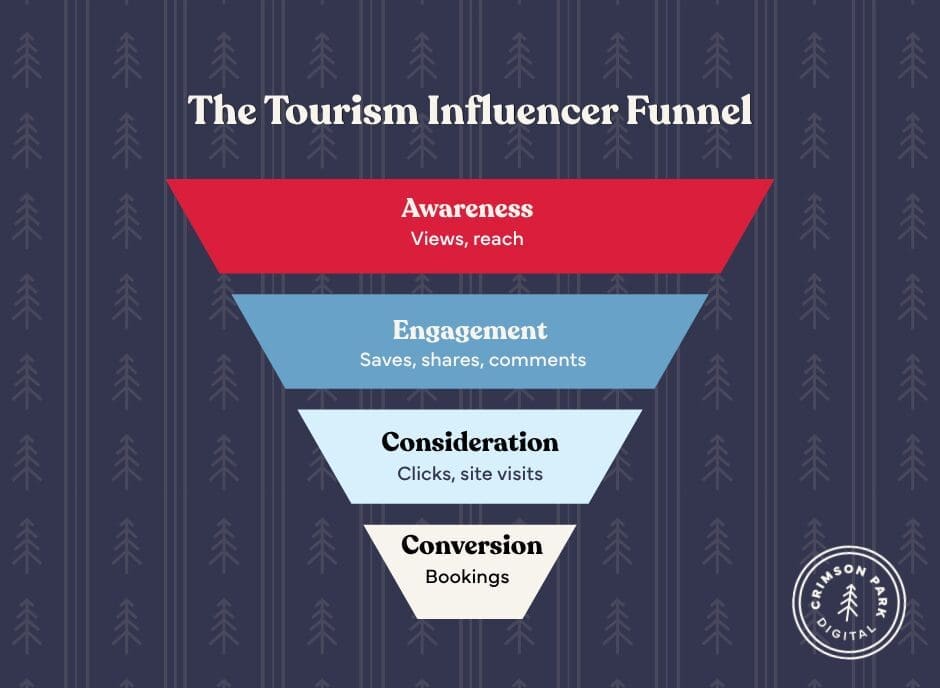
- Awareness: Are more people discovering your destination?
- Consideration: Are they engaging, saving, clicking, researching?
- Conversion: Are they actually booking, visiting, or planning?
Not every campaign is built to close the deal. Some are meant to spark interest. Others move people closer to action.
Clarity on your goal changes everything about how you measure success.
Start With the End in Mind (Before the Campaign Even Launches)
This is where most campaigns quietly fall apart. You can’t measure ROI after the fact if you didn’t set it up properly from the start.
Before any creator packs a suitcase, lock in:
- What does success look like?
- What action do you want users to take?
- Where are you sending traffic?
- How will you track it?
If the answer is “we’ll figure it out later,” you probably won’t.
Instead, map the journey:
- Instagram post → link in bio → landing page → itinerary download → email capture → booking partner
Now you have something you can actually track.
The Metrics That Actually Matter (and the Ones That Don’t)
It’s tempting to screenshot a post with 200K views and call it a win. And sure, that’s a signal. But it’s not the full story.
Here’s how to look deeper.
1. Engagement Quality Over Vanity Metrics
Not all engagement is created equal.
Look for:
- Saves and shares (these signal intent)
- Comments that show planning behavior (“adding this to my list”)
- DMs or inquiries
A post with fewer likes but tons of saves can outperform a viral video in the long run.
2. Traffic That Goes Somewhere
If your influencer campaign isn’t driving traffic, you’re missing a key piece of ROI.
Track:
- Click-through rates from bio links or story links
- Time spent on your site
- Pages per session
High traffic with low engagement on-site? Something’s off. Either the content didn’t match the landing page, or expectations weren’t aligned.
3. Content That Keeps Working After the Post
Tourism content has a longer shelf life than most industries. That Reel from last summer? It might still be driving interest today.
Pay attention to:
- Ongoing views over time
- Evergreen saves
- Repurposing potential across your own channels
This is where influencer marketing quietly builds compounding value.
4. Conversion Signals (Even If They’re Indirect)
Not every campaign will give you a clean “this post led to 47 bookings” report.
But you can track signals like:
- Guide downloads
- Newsletter signups
- Clicks to partner sites
- Promo code usage (when applicable)
These are breadcrumbs. Follow them.
Attribution Is Messy. That’s Normal.
Attribution in tourism marketing is not perfectly clean.
Someone might:
- See an influencer post
- Google your destination later
- Click a paid ad
- Visit your site three times
- Book through a third-party platform
So who gets the credit? The answer is usually: multiple touchpoints.
Instead of chasing perfect attribution, focus on patterns:
- Are branded searches increasing?
- Are more users entering your funnel after campaigns launch?
- Are certain creators consistently driving stronger downstream activity?
That’s where the real insight lives.
Give Influencers the Right Tools (So You Can Track Properly)
You don’t need to overcomplicate things, but you do need structure.
A few essentials:
- Custom tracking links (UTMs): Know exactly where traffic is coming from
- Dedicated landing pages: Match the content and keep the experience seamless
- Unique promo codes or offers: When applicable, they help tie action back to content
- Clear CTAs: Don’t assume the audience knows what to do next
When creators have direction, performance becomes much easier to measure.
Don’t Ignore the Power of Storytelling Metrics
Tourism is emotional. People don’t book trips because of a spreadsheet. They book because they can picture themselves there.
So yes, track performance. But also pay attention to:
- How people are talking about your destination
- What moments are resonating
- Which experiences are getting repeated across creators
If everyone’s posting the same landmark, you’re missing an opportunity. If one creator uncovers something unique and it takes off, that’s a signal worth leaning into.
Compare Creators the Right Way
Not every influencer should be measured by the same benchmark. A macro creator might drive massive awareness. A niche travel creator might drive higher-intent traffic and reservations.
Instead of asking “who performed best,” ask:
- Who drove the most engaged audience?
- Who aligned best with the destination brand?
- Who created content we can reuse?
- Who influenced real planning behavior?
Sometimes the quiet performers are the ones doing the heavy lifting.
Build a Feedback Loop (Not Just a Report)
The biggest missed opportunity in influencer campaigns? Treating them as one-and-done. Every campaign should make the next one smarter.
After each campaign:
- Review what content performed best
- Identify which audiences responded most
- Refine your creator mix
- Adjust your messaging
Over time, this turns influencer marketing from a guessing game into a strategy.
The Hidden ROI Most DMOs Overlook
Here’s something that doesn’t always show up in reports: Content value. Influencers are not just distribution channels. They’re content creators producing high-quality, on-location assets.
Think about:
- Website imagery
- Paid ad creative
- Social media content
- Email campaigns
When structured correctly, one influencer trip can fuel months of marketing. That value adds up fast.
Common Pitfalls (So You Don’t Fall Into Them)
A few things that quietly hurt ROI:
- No clear CTA
- Sending traffic to a generic homepage
- Choosing creators based only on follower count
- Not aligning content with the season or travel window
- Skipping post-campaign analysis
None of these are dramatic mistakes. But together, they can water down results.
Bringing It All Together
Measuring influencer ROI for tourism campaigns isn’t about chasing one perfect number. It’s about understanding how people discover, explore, and eventually choose your destination.
The magic is still in the storytelling. The strategy is in knowing what to track, when to track it, and how to connect the dots.

When those two pieces work together, influencer marketing stops feeling like a gamble and starts becoming one of the most powerful tools in your destination’s toolkit.
If you’re thinking about how to make your next campaign not just look good, but perform, that’s exactly where Crimson Park Digital comes in. Let’s chat!


