So what exactly is landing page optimization?
Landing page optimization is the ongoing process of making tweaks to your page elements so visitors feel more confident taking action. That action might be booking a consultation, purchasing a product, downloading a helpful resource, or reaching out for more information. Every landing page has a purpose and the job of optimization is to help visitors reach that purpose with less friction and more confidence.
A high-performing landing page does not just look nice. It connects to visitor intent, feels helpful, builds trust, and gently encourages users toward your call to action instead of forcing them to hunt through a bunch of distracting information.
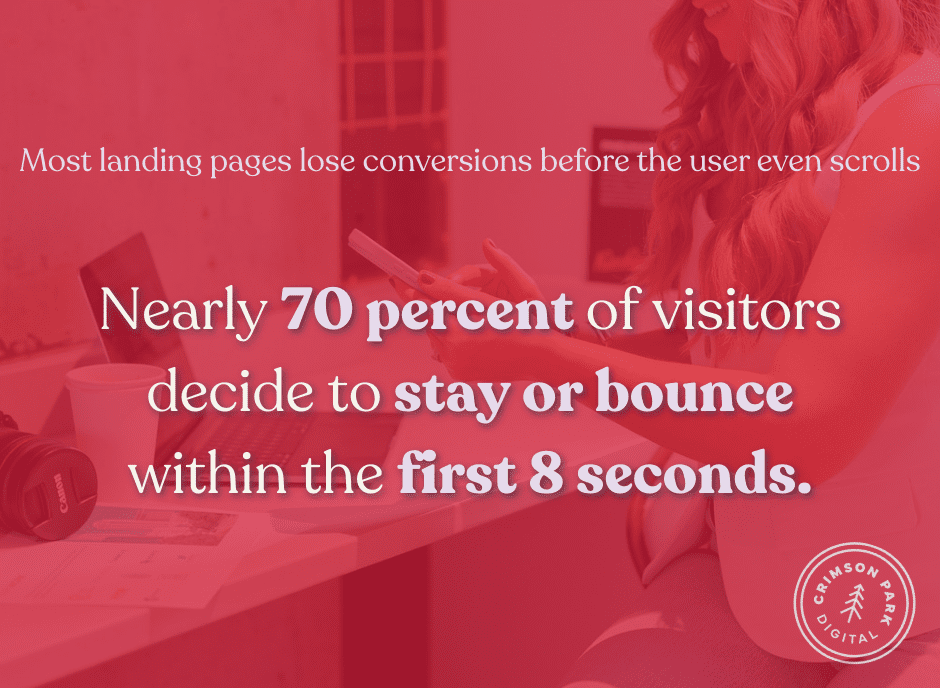
If that sounds strategic, it is. But it can also be fun. Every tiny adjustment reveals something about your audience: what inspires them, what turns them off, what language they love, and sometimes what surprises them enough to click.
Why landing page optimization matters for brand growth
Think of landing pages as your online sales reps. They work 24/7. But like any good rep, they need training. A well-optimized landing page increases conversion rates, drives stronger ROI, and makes every marketing dollar stretch farther.
Strong landing pages help you:
- Increase conversions from paid social and paid search
- Build trust with new visitors
- Improve user experience
- Support local SEO performance in Charlotte, Charleston, and surrounding areas
- Reduce wasted ad spend
- Turn curious visitors into actual customers
Your landing page is often the deciding factor between choosing you or bouncing to a competitor. A confusing layout or weak CTA invites visitors to leave. A polished and friendly page invites them to stay, learn, and click.
What actually makes a landing page high-converting?
A strong headline that grabs attention
Your headline should immediately answer the question your visitor is already asking. If they clicked from a Google Ad about social media management in Charlotte, your headline should greet them with something clearly related, instead of something vague like Welcome to Our Site.
Copy that feels human, clear, and helpful
No jargon. No paragraphs stuffed with filler words. The best landing page copy talks like a real human would, and focuses on what the user wants, not everything the business wants to brag about.
CTAs that stand out visually
No one clicks a button they can barely find. CTAs should use action language, visible colors, and placement that feels easy to spot.
Visuals that support the story
Images, graphics, or short video clips should make the content feel trustworthy and relevant. If visuals feel random, the visitor feels confused.
Mobile-friendly layout and fast load time
Visitors scroll fast, especially on mobile devices. If your page feels slow or hard to read on a phone screen, conversions can tank quickly.
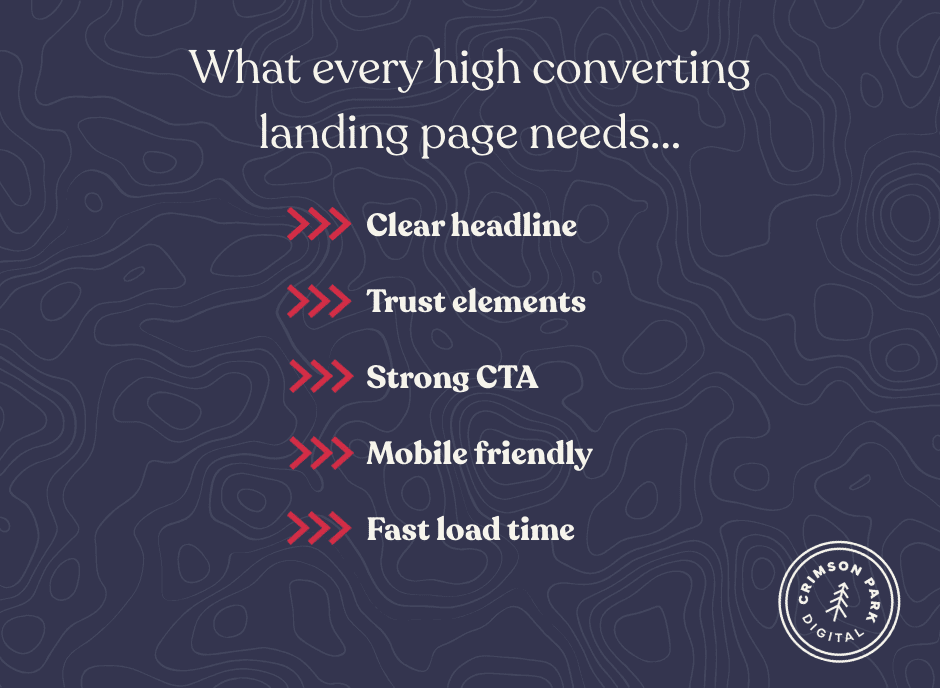
These five elements work together to create a page people actually want to interact with.
Best practices that help conversions
There are a handful of universal landing page best practices we always guide clients toward. We tailor the details for each business, so take this list as a friendly starting point rather than the ultimate blueprint.
- Match ad messaging to the landing page
- Keep navigation minimal so visitors stay focused
- Highlight social proof
- Simplify forms
- Test layout and CTA placement
- Review heatmaps and user behavior
When businesses skip these steps, they waste traffic and wonder why conversions feel unpredictable. With just a few strategic changes, sudden improvements start to appear.
Where headlines and copy make the magic happen
Headlines are your online first impression. They should clearly speak to the value you offer in just a few words. Not clever for clever’s sake, but direct, confident, and curiosity-sparking.
Your body copy should tell a short story that answers three things:
- What is in it for me
- Why is this company the one I should trust
- What do I do next
Instead of huge paragraphs, use short sentences, simple language, bullet points, and a little personality. Humor never hurts, especially if your brand voice allows it. The goal is not to impress. The goal is to connect.
CTAs that actually get clicked
A CTA should be a natural next step, not a demand. Use intentional language with action words like book, schedule, download, or get started. Test different versions. Test button colors. Try moving a CTA higher on the page. Sometimes small changes create huge improvements.
Visuals and layout matter more than people think
Visual content should help users feel informed and comfortable. Real people, real locations, or authentic visuals tend to perform better than vague stock imagery. That said, stock photos can still be beneficial when chosen intentionally. Just avoid cheesy or confusing images that don’t match your message.
A clean, structured layout always wins out over an overly designed one. White space helps visitors absorb information faster and stay focused on your CTA.
Mobile optimization and page speed are not optional anymore
More than half of your visitors are likely reading on a phone, which means everything needs to load quickly, format correctly, and scroll smoothly. A slow landing page kills conversions instantly.
Remove heavy scripts, compress images, and shorten load times wherever possible. This is one of the biggest reasons brands outsource landing page optimization. Technical improvements require ongoing monitoring, and most businesses simply don’t have time to babysit site speed metrics all week.
Forms: keep them simple
Want more leads? Ask for less information. A short form almost always outperforms a long one. Ask for only what you absolutely need. Visitors lose patience when they see too many required fields and bounce before submitting.
Auto fill, short questions, and straightforward labels increase conversion and help visitors feel more comfortable.
Trust signals create confidence
People convert when they feel confident. Trust signals include testimonials, reviews, client logos, case study highlights, and security badges. If a visitor feels unsure, your trust elements remove friction and boost confidence quickly.
This is extra important for service-based businesses because buyers often compare multiple local providers and want proof that they are choosing the best option.
A/B testing keeps results improving
Guessing rarely works. Testing always works. Common A/B tests include headlines, CTA copy, visual placement, button colors, and hero section layout. Testing helps you discover what your specific audience prefers rather than assuming what might work.
It is never one and done. It is ongoing improvement driven by actual data.
Tools worth exploring
There are tons of landing page platforms and analytics tools out there. A few popular options include:
Some are great for DIY testing, and others are better for teams that already have conversion experience. What matters most is choosing a tool you can stick with long enough to gather meaningful data.
Common landing page mistakes that cost conversions
The most common mistakes we see across industries are:
- Cluttered or distracting design
- Slow mobile load times
- Weak or hidden CTAs
- Long forms that frustrate visitors
- Messaging that does not match the ad or keyword intent
If your visitors arrive expecting one thing and find something unrelated, they will abandon it immediately.
Measuring success with analytics
Conversion rate, bounce rate, click-through rate, and scroll depth are valuable indicators. Heatmaps also reveal where users stop, what they ignore, and what they click. When businesses consistently review analytics, landing pages continue to improve, evolve with trends, and outperform competing sites.
Turn Every Visit Into an Opportunity
Landing page optimization is not something you finish in a weekend. It is a smart mix of creative testing, strategic thinking, UX decisions, and data-driven improvements. Even a single landing page can evolve dozens of times over the year and continue increasing conversion results.
If your business relies on lead generation, paid search, paid social, or location-based SEO, optimization should be a top priority. The landscape is competitive, and your landing page might be the exact moment a user decides to choose you over someone else.

If you want expert recommendations, testing guidance, and full support for planning landing pages that actually convert, our team at Crimson Park Digital can help. We specialize in building and optimizing landing experiences that increase leads, reduce wasted ad spend, and strengthen long-term growth.
Reach out to us today, and let’s build pages visitors actually want to click.