
There’s a quiet shift happening in search that most brands are only half noticing.
“Near me” used to be a simple local SEO game. Rank in the map pack, get reviews, keep your Google Business Profile tidy, and call it a day.
Now? “Near me” searches are turning into “just tell me the best option.”
And that one change is rewriting how local brands show up, get recommended, and get chosen.
Local SEO and multi-location marketing strategies are becoming an underused advantage for earning visibility in AI-driven search results, especially in “near me” and multi-location recommendation queries. The brands that understand local structure, entity consistency, and location depth are the ones most likely to get pulled into AI answers, not just map listings.
At Crimson Park Digital, we’ve been leaning into this shift for a while, especially across healthcare, tourism, and multi-location service brands. And the gap between “we have locations” and “we are structured for local discovery” is where most brands are quietly losing visibility.
“Near me” is no longer just about geography
Search used to be straightforward. Someone typed “dermatologist near me” and got a map pack. The winner was often whoever had the strongest proximity signals and review volume.
Now, AI-assisted search is layering context on top of that.
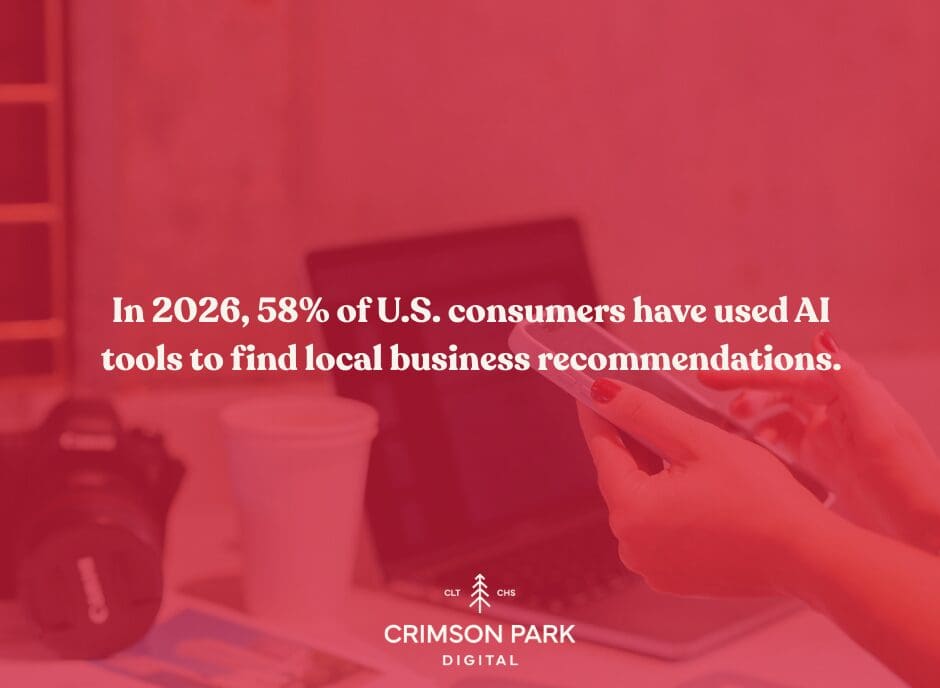
Instead of just:
- “dentist near me”
We’re seeing:
- “best dentist near me for anxious patients”
- “who is the most trusted orthopedic clinic near me for athletes”
- “top-rated vein specialist near me with minimal downtime”
Search is no longer just location-based. It’s intent-based + location-aware. That shift changes everything about how local brands need to structure their digital presence.
Because AI systems are not just pulling from a single page or listing. They’re interpreting entities, location consistency, content depth, and authority signals across the entire ecosystem.
If that sounds abstract, it kind of is. But the outcome is simple: Brands with clean, structured, multi-location ecosystems are getting surfaced more often in AI-generated recommendations.
Brands without it are getting skipped.
Local SEO is now an AI inclusion lever
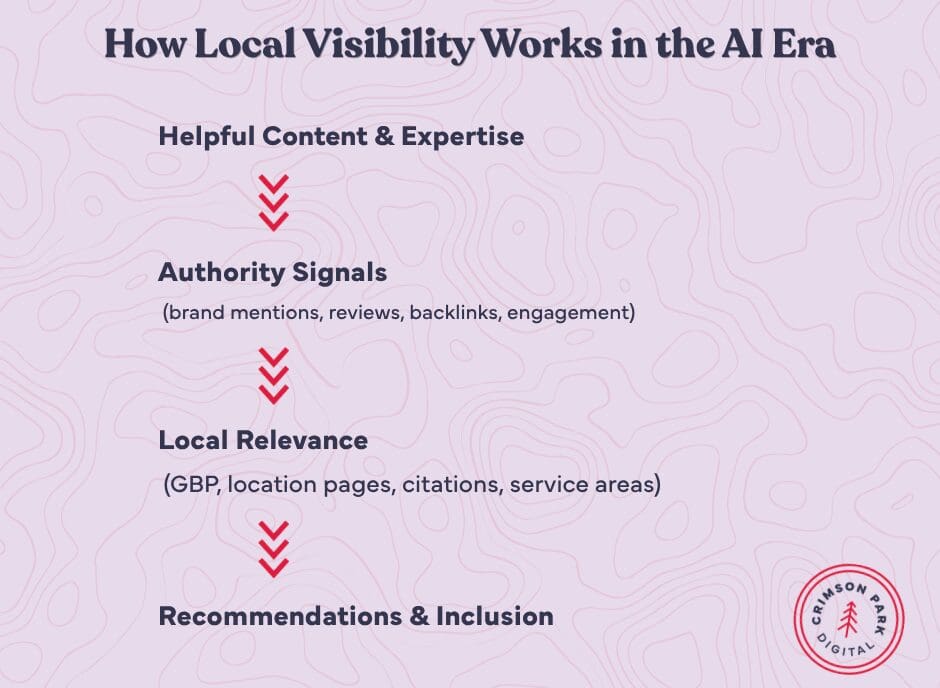
Local SEO is no longer just about rankings. It’s about inclusion. AI-driven search experiences are increasingly acting like curators. They’re not just listing options, they’re selecting them. That selection process depends heavily on how confidently a system can understand:
- Who you are
- Where you operate
- What each location actually offers
- Whether your information is consistent everywhere it appears
- Whether real users validate your presence through reviews and engagement
This is where local SEO overlaps directly with AI visibility.
Why multi-location brands have an advantage (if they get it right)
Here’s the interesting part. Multi-location brands often think they are at a disadvantage in SEO because of scale. More locations mean more pages, more complexity, more things to maintain. But AI systems actually see it differently.
When structured correctly, multi-location brands create more opportunities to demonstrate expertise, earn trust, and reinforce relevance across the markets they serve.
Each location becomes its own signal hub:
- Unique service offerings
- Local relevance signals
- Reviews and reputation
- Relevant local resources and insights
- Community engagement
When those hubs are connected properly, the brand starts to look like a strong network of verified entities rather than a single isolated website.
And it’s exactly where CPD tends to see the biggest wins for clients. Not because of hacks or shortcuts, but because structure wins in systems that rely on pattern recognition.
What AI search actually “reads” in local SEO
AI search doesn’t read your website the way a human does. It’s not skimming headlines or appreciating clever copy.
It’s interpreting signals. The strongest ones tend to be:
1. Entity consistency
Your brand, locations, and services need to be represented consistently across your site, Google Business Profiles, directories, and structured data.
If one location is “Charlotte Vein Clinic” and another is “Charlotte Vein Center,” that inconsistency creates friction. AI does not love friction.
2. Structured location depth
A single “locations” page is no longer enough for multi-location brands. Each location needs its own structured presence with clear differentiation.
3. Helpful content with authentic local relevance
A common misconception is that every piece of content needs a city attached to it. In reality, search engines and AI systems are getting much better at recognizing expertise regardless of whether a location appears in the title.
Strong educational content that answers real questions, demonstrates experience, and provides genuine value often carries more weight than dozens of templated “service + city” blogs. Local relevance still matters, but it should feel natural.
The goal isn’t to create more local content. It’s to create better content that reinforces expertise while helping search engines and AI systems understand where that expertise exists.
4. Reviews and reputation signals
Reviews are no longer just conversion tools. They are trust signals that influence whether AI systems feel confident recommending you.
5. Google Business Profile strength
Still foundational. Still heavily weighted. Still one of the strongest inputs into local visibility. This is where platforms like Google remain central to the entire ecosystem.
The multi-location SEO framework most brands miss
A lot of brands stop at “we created location pages.” That’s step one. Not the strategy. A stronger approach usually includes:
1. Location pages that actually behave like local hubs
Not templated pages with swapped city names.
Each location page should feel like:
- A micro-homepage for that market
- With a unique service emphasis
- Local proof points
- Real differentiation in messaging
2. Internal linking that reinforces location authority
Search systems rely heavily on how content is connected.
Your location pages shouldn’t exist in isolation. They should connect naturally to relevant services, providers, resources, and educational content across the site. Strong internal linking helps search engines and AI systems understand the relationship between your expertise and the markets you serve.
3. Topic clusters that support local visibility
Instead of creating dozens of nearly identical “service + city” articles, focus on building authoritative content around the topics your audience actually cares about.
Think:
- Comprehensive educational resources
- Frequently asked questions
- Case studies and success stories
- Industry insights and thought leadership
When paired with strong location pages, internal linking, and local signals, this content helps establish authority across your entire footprint without relying on thin, location-specific content. The strongest local SEO strategies today are often built on topical depth rather than geographic content volume.
4. Consistent directory and citation management
If your listings are inconsistent across the web, AI systems hesitate to trust them.
Where most brands quietly mess this up
Here’s where we typically see brands leave visibility on the table:
- Duplicate or near-duplicate location pages: Search engines and AI systems can quickly identify thin content that provides little unique value. Every location page should serve a purpose beyond swapping out city names.
- Inconsistent business information: Different phone numbers, naming conventions, addresses, or service descriptions across platforms can weaken trust signals and create confusion about your brand’s identity.
- Treating content as a one-time asset: Many brands publish a blog, share it once, and move on. The strongest content strategies compound over time through updates, internal linking, repurposing, social distribution, email marketing, PR opportunities, and ongoing promotion. Visibility rarely comes from publishing alone.
- Over-relying on one visibility channel: Some brands focus entirely on Google Business Profiles. Others focus only on organic rankings. The strongest local presence happens when local SEO, content, reputation management, PR, social media, and organic search work together.
- Treating SEO and local SEO as separate strategies: They are no longer separate disciplines. Strong educational content builds authority. Local signals establish relevance. Together, they help search engines and AI systems understand both what you know and where you serve.
How CPD thinks about this (without overcomplicating it)
We don’t approach local SEO as a checklist. We treat it as a visibility system.
The question isn’t: “How do we rank this page?”
It’s: “How do we become the most credible answer for this topic in the markets we serve?”
That shift changes how content gets created, how authority is built, and how local signals reinforce expertise across multiple locations.
It also changes what we prioritize for multi-location brands:
- Clarity over volume
- Authority over shortcuts
- Consistency over complexity
- Depth over duplication
- Compounding visibility over one-time wins
The strongest local brands aren’t publishing more content than everyone else. They’re creating valuable resources, connecting them to their local presence, and continuously distributing, repurposing, and amplifying them across channels.
It’s more work upfront. But it creates a foundation that search engines, AI systems, and potential customers can actually trust.
Why this matters more now in 2026 than ever
Search is moving toward answer generation, not just result listing.
That means AI systems are increasingly deciding which brands deserve to be referenced, cited, and recommended when users ask questions.
Those recommendations can show up in:
- “Best of” summaries
- “Near me” recommendations
- Local service comparisons
- Industry-specific guidance
- Multi-location searches
The brands that earn those mentions typically have three things working together:
- Strong expertise
- Clear authority signals
- Consistent local relevance
If your brand isn’t structured clearly enough to be understood, or trusted enough to be referenced, it becomes much harder to earn visibility in AI-driven search experiences.
What This Means for Multi-Location Brands
Local SEO used to be largely about being found. Today, it’s about being trusted.
The brands winning visibility in AI search aren’t necessarily the ones publishing the most location pages or chasing every local keyword variation. They’re the brands building authority through helpful content, earning trust across channels, and creating clear signals about where they operate and who they serve.
That’s where a multi-location strategy becomes more than site architecture. It becomes a framework for connecting expertise, reputation, and local presence into a visibility system that compounds over time. And that’s where many brands are still underinvesting.
If your local SEO strategy feels disconnected from your content strategy, PR efforts, social presence, or broader marketing goals, it may be time to stop thinking about rankings and start thinking about authority.

That’s exactly the kind of work we help clients navigate at CPD. Because in 2026, the brands that earn visibility aren’t just optimized. They’re trusted. Let’s chat!


