
Every destination is fighting for the same traveler’s attention, ad costs can climb fast, and travelers are discovering places to go from Instagram Reels to AI-powered search results and everything in between. The old “launch a summer campaign and hope for the best” approach is not cutting it anymore.
The destinations seeing the strongest performance right now are getting more strategic with paid media, too. Smarter targeting. Better creative. More platform-native content. More focus on intent and timing, instead of just reach.
And honestly, travelers can tell the difference.
The campaigns winning this summer feel less like ads and more like authentic inspiration. They meet travelers where they already are, whether that’s scrolling TikTok, searching for weekend getaway ideas on Pinterest, or getting retargeted after looking at hotels three days ago.

Your Creative Needs to Look Less Like an Ad
Travelers have gotten very good at ignoring polished tourism ads.
You know the ones. Slow drone shot. Generic beach footage. A smiling couple holding wine glasses while staring into the sunset. Technically beautiful, but also easy to scroll past because it looks exactly like every other destination campaign.
What’s performing better right now are creatives that feel native and organic to the platform.
Think:
- Fast-cut Reels
- “Weekend itinerary” style videos
- Local recommendations
- POV-style content
- Quick hidden gem roundups
- User-generated content
- Creator-led storytelling
The goal is not to make your destination look perfect. The goal is to make people picture themselves there. That’s a huge difference.
Travel advertising has shifted from polished brand messaging to experience-driven storytelling. People want content that feels immersive and real; especially younger travelers.
This also means destinations need more creative volume than ever before. One polished hero video is no longer enough to sustain a summer campaign. Platforms reward freshness, testing, and content variation.
The destinations seeing the best paid performance are constantly rotating creative and adapting based on audience behavior.
Short-Form Video is Carrying Entire Campaigns
At this point, short-form video is not optional for destination marketing.
Travel discovery is happening on TikTok, Instagram Reels, YouTube Shorts, Pinterest, and even within AI-generated search experiences that prioritize video-heavy content. If destinations are still relying heavily on static graphics, they’re missing how travelers actually consume content now.
And no, not every video needs a massive production budget.
Some of the strongest-performing destination ads are surprisingly simple:
- “Spend 48 hours with me in Charleston”
- “3 rooftop spots locals actually love”
- “A perfect rainy weekend itinerary”
- “What $100 gets you here”
- “Summer festival guide”
That style of content works because it feels useful first and promotional second. People are looking for experiences, not taglines.
One thing destination teams should pay attention to this summer is watch time and engagement quality, not just impressions. A video that keeps someone watching for 15 seconds is often far more valuable than a flashy video someone scrolls past in two. Attention is the currency now.
Stop Targeting Everyone
A lot of destination campaigns still target broad audiences and hope the algorithm figures it out. Sometimes it does. A lot of times it does not.
The strongest paid media campaigns are built around traveler intent and traveler type. Different audiences need completely different messaging, visuals, and offers.
Someone planning a luxury anniversary trip is not responding to the same creative as a family searching for affordable summer activities.
That sounds obvious, but a surprising number of campaigns still treat “potential guests” as one giant audience bucket.
Smarter audience segmentation might include:
- Weekend road trippers
- Families traveling with kids
- Sports tourism audiences
- Concert and event travelers
- Food-focused travelers
- Couples
- Luxury travelers
- Outdoor adventure travelers
Even small adjustments in messaging can make a huge difference in performance. The destinations seeing stronger ROAS are getting more intentional about aligning audience targeting with creative and landing page experience, instead of using one-size-fits-all campaigns.
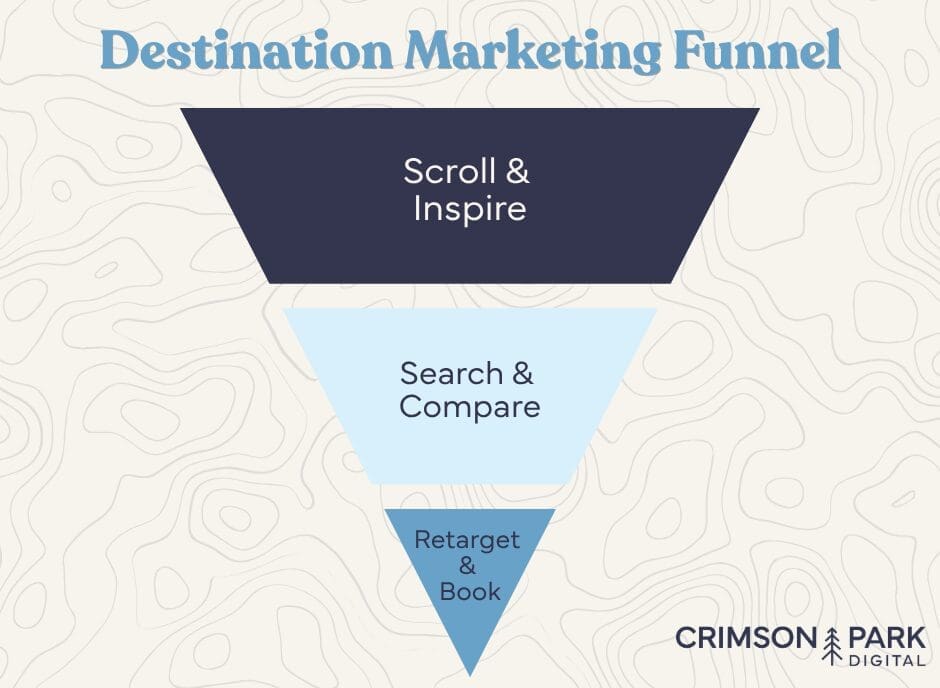
Retargeting Should Feel Helpful, Not Creepy
Retargeting still works incredibly well for travel marketing, but the way destinations approach it matters.
Travelers rarely book on the first visit. They research. Compare. Scroll. Get distracted. Open 14 tabs. Forget about half of them. Then come back later; perhaps on a different device even.
Retargeting helps destinations stay part of that decision-making process. The mistake happens when retargeting becomes repetitive or overly aggressive. Showing the same generic ad 25 times is not a strategy.
Smarter retargeting campaigns feel more personalized:
- Showing nearby attractions someone may have missed
- Highlighting seasonal events
- Featuring restaurants or nightlife
- Promoting itinerary ideas
- Surfacing social proof
- Reintroducing hotel packages
Good retargeting feels like a reminder. Bad retargeting feels like being chased around the internet. There’s a very clear difference.
Geo-Targeting Gets More Valuable During Summer Travel Season
Summer travel behavior is incredibly location-driven.
People search while traveling. While road-tripping. While sitting in airports. While visiting nearby cities. While looking for last-minute weekend plans.
That’s why geo-targeting can become one of the most effective paid media tactics during peak travel months.
Destinations can strategically target:
- Nearby drive markets
- Airport audiences
- Event attendees
- Competing destinations
- Travelers currently within a certain radius
- Major metro areas
And timing matters here too. A traveler already visiting a nearby region is far more likely to convert on a spontaneous weekend extension than someone casually browsing six months out.
The best geo-targeted campaigns feel timely and hyper-relevant. Not random.
Search Campaigns Still Matter More Than People Think
Paid social gets a lot of attention, but paid search remains one of the highest-intent channels in destination marketing. Especially during summer.
Travelers are actively searching:
- “Best beach towns near me”
- “Weekend getaways in South Carolina”
- “Things to do this weekend”
- “Family-friendly vacation destinations”
- “Best summer festivals”
Those searches signal intent. And intent-driven traffic is valuable. Strong destination search strategies go beyond bidding on obvious tourism keywords. They focus on search behavior, seasonal trends, local events, and traveler motivation.
This is also where landing page experience becomes critical. A great ad cannot save a weak landing page.
If someone clicks an ad and lands on an outdated page with slow load times, generic content, or confusing UX, they leave fast. Especially on mobile.
And with paid media costs continuing to rise, wasted clicks get expensive quickly.
Influencer Partnerships Need to Feel More Authentic
Travel audiences are getting better at spotting forced influencer partnerships immediately. The strongest creator collaborations right now feel natural, localized, and experience-driven. Interestingly, bigger is not always better here.
Micro-influencers and regional creators often outperform larger accounts because their audiences trust them more. Their content also tends to feel less scripted and overly commercial.
What’s working well:
- Local food guides
- Hidden gem recommendations
- Weekend itineraries
- Event coverage
- “What I’d do in 24 hours here”
- Family travel content
- Local business spotlights
Destinations should also think beyond vanity metrics.
Follower count matters far less than engagement quality, audience alignment, and content style. A creator with a smaller but highly engaged travel audience can often drive far stronger results than a massive influencer with broad reach and low trust.
AI Search is Quietly Changing Travel Discovery
This is the shift destination marketers really need to pay attention to right now. Travel discovery is no longer happening exclusively through traditional Google searches.
Travelers are using:
- TikTok search
- Reddit threads
- AI-generated search experiences
- Instagram recommendations
- YouTube travel content
- Creator roundups
- Conversational AI tools
That means destination content and paid media strategies need to work together across the full discovery ecosystem.
The destinations gaining visibility are creating content that is:
- Conversational
- Helpful
- Experience-focused
- Specific
- Search-friendly
- Platform-native
Generic tourism messaging is becoming easier for both algorithms and users to ignore.
Specificity wins.
“Plan the perfect girls’ weekend in Charleston” performs better than “Visit Charleston this summer.”
“Best dog-friendly patios downtown” is more engaging than “Explore our dining scene.”
Intent-driven content matters more than ever.
Why Smarter Paid Media Strategies Are Defining Destination Marketing Success
The destinations winning this summer are not necessarily the ones spending the most money or using the flashiest creative.
They’re the ones building smarter campaigns.
The ones testing creatives constantly. Paying attention to traveler behavior. Creating platform-native content. Aligning messaging with intent. Understanding how discovery is changing. And adapting quickly when trends shift.
Keeping up with evolving platforms, audience behavior, AI search changes, creative trends, and campaign optimization while also managing an entire destination brand internally can become overwhelming fast.

That’s where having the right strategic partner matters. At Crimson Park Digital, we help destinations create paid media strategies built for how travelers actually discover, research, and book experiences today. From audience targeting and creative strategy to campaign optimization and multi-platform execution, our team helps destinations turn attention into action.


