
If you’re trying to get more patients through the door, paid advertising can absolutely be part of the marketing strategy. But it isn’t the only lever you can pull.
Search opportunities often hide in plain sight and can help your practice become more visible to people already looking for the services you offer.
We’re talking about searches that happen before someone ever clicks an ad.
The question might be, “What does this symptom mean?” Or “Do I need to see a specialist?” Or even something as simple as “physical therapy near me.”
Those searches are opportunities for your brand to show up, answer the question, and start building trust.
For practices with smaller marketing budgets, or organizations that aren’t ready to invest heavily in advertising yet, SEO, AI search optimization, and a strong organic visibility strategy can be especially valuable places to start.
And even when paid media is part of the mix, organic search still matters. The two can work together to create a stronger presence throughout the patient journey.
Your Next Patient Is Probably Searching Before They’re Booking
Healthcare decisions rarely start with a booking form. Most people have questions first.
They might search for symptoms, treatment options, providers, insurance information, what to expect at an appointment, or whether they even need professional care yet.
That’s a lot of potential search behavior happening before the booking. And here’s the thing: your practice doesn’t need to win every search. You want to be visible for the searches that actually make sense for your services and the patients you want to reach.
That means looking beyond the obvious high-volume terms and paying attention to the questions and topics surrounding them. Those less obvious searches can be some of the most useful opportunities.
Look Beyond the “Big” Keywords
One of the most common SEO misconceptions is that success means ranking #1 for the biggest keyword in your industry. Sure, that would be great. But it’s not the whole story.
A practice could spend months chasing a broad term like “orthopedic doctor” while missing dozens of more specific searches from people who are much closer to taking action.
Think about the difference between:
“back pain” and “when should I see a doctor for lower back pain?” Or: “Dermatologist” and “what does a dermatologist treat?”
The second search may have less volume, but it tells you something about what that person needs right now.
This is where a thoughtful organic visibility strategy can uncover opportunities that aren’t always obvious from a keyword list.
We look at the broader search journey, not just individual keywords.
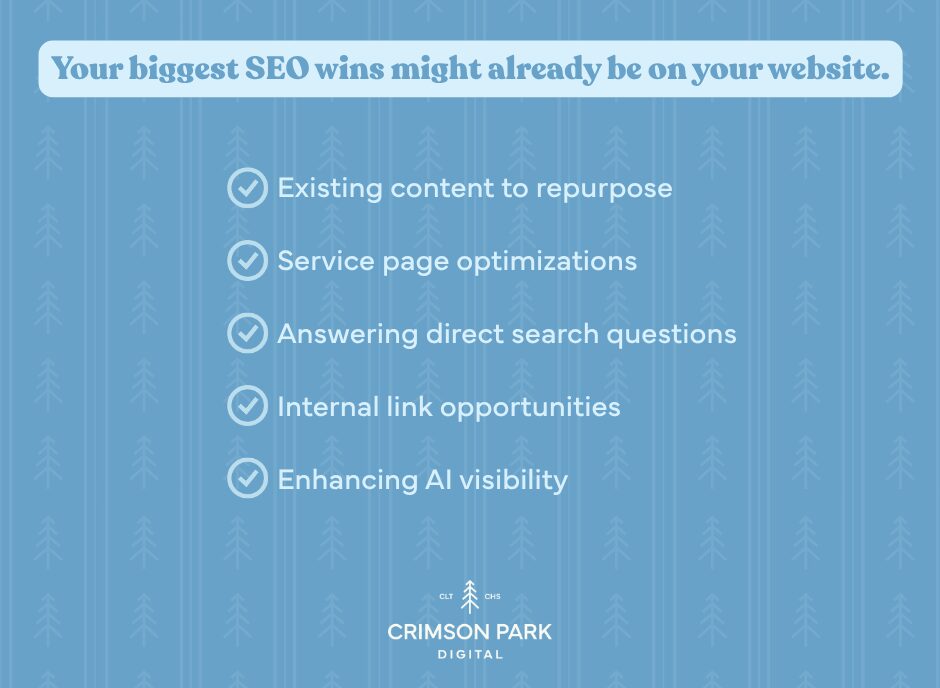
Your Existing Content May Have More Potential Than You Think
Sometimes the opportunity isn’t creating something completely new. It’s improving what you already have.
A healthcare practice may have dozens of helpful blogs and service pages on its website, but some aren’t getting the visibility they deserve. Maybe the content doesn’t fully answer the question. Maybe the page isn’t structured clearly. Maybe internal links aren’t helping users or search engines discover related content. Maybe the topic has changed since the page was published.
Those are opportunities.
A strategic content refresh can be more valuable than constantly adding new blog posts.
The same goes for your core service pages.
If someone lands on a page after searching for a specific treatment, can they quickly understand what you offer, who it’s for, what to expect, and what they should do next?
SEO gets someone to the page. The page still has to earn their trust and encourage action
And Now, There’s AI Search to Think About
Search isn’t just happening in traditional search results anymore.
Patients are increasingly using AI-powered tools to ask questions, compare options, and research healthcare topics.
That creates another layer of visibility for practices to think about.
AI search optimization isn’t about stuffing a few new keywords onto your website and hoping ChatGPT notices you.
It’s about making your brand and content easier for search systems to understand, trust, and connect with relevant questions.
That can include things like clear answers, strong topical coverage, useful supporting content, consistent information, and a website that clearly demonstrates expertise.
The goal isn’t to “hack” AI search.
It’s to make sure your practice has the depth and clarity needed to be part of the conversation when someone asks a question related to your services.
And importantly, the work you do for AI visibility can support traditional organic search, too. That’s one reason we look at SEO and AI search as connected parts of a larger organic visibility strategy, rather than completely separate services.
Organic and Paid Don’t Have to Compete
Paid search and paid social can be incredibly valuable, especially when you need to reach a specific audience, promote a service, support a new location, or generate demand more quickly.
In fact, we often use paid and organic strategies together.
The advantage of organic visibility is that it can build over time and create additional touchpoints without requiring a paid ad impression every time someone sees your brand.
Paid media campaigns can help you reach the right people now, and organic efforts can help you become part of the research process that happens before, between, and after those paid interactions.
And when the two strategies inform each other, your marketing budget can work harder.
The Catch: Organic Visibility Doesn’t Always Look Like a Booked Appointment
We make an important distinction when reporting on organic and AI search performance. Visibility isn’t the same thing as conversion.
Someone might read three of your blogs, see your practice in an AI-generated answer, search your brand name a week later, and eventually book an appointment directly.
Google Analytics may give the final booking credit to that direct website visit. That doesn’t mean the earlier touchpoints didn’t matter.
Organic search and AI visibility can help introduce your brand, answer questions, build familiarity, and establish trust long before someone is ready to schedule.
That’s why we don’t look at organic performance through a single “how many leads did SEO generate?” lens.
We also look at things like:
- Organic impressions and clicks
- Search visibility and rankings
- Growth in non-branded searches
- Engagement with key content
- Visibility across AI search experiences
- Branded search growth
- Traffic to high-intent service pages
- How organic users move through the website
None of those metrics should replace standard conversion tracking, either. They give us more context around how people are discovering and interacting with your brand before the conversion happens.
So, Where Should You Start?
You don’t necessarily need a bigger advertising budget to find your next marketing opportunity.
Sometimes the best first step is figuring out what you’re already missing. Which searches are you not showing up for? Which pages have potential? What questions are patients asking? Where does your content need more depth? How visible is your practice in AI search? And are all of those touchpoints telling a consistent story about your brand?
Those answers can uncover opportunities to improve organic visibility and strengthen the rest of your marketing strategy.
And that doesn’t mean choosing between organic and paid. It means making sure you’re not relying on one channel to do all the work.

At Crimson Park Digital, we bring SEO, AI search optimization, content, paid media, social, creative, and strategy into the same conversation. As a boutique agency, we’re close to the details and the bigger picture at the same time. Our teams aren’t operating in separate silos and handing work off down the line. We’re in the nitty-gritty together, looking at what’s working, what’s being missed, and how each channel can support the next step.
If you’re looking for more visibility, more qualified traffic, and a marketing strategy built around the full patient journey, we’re here to chat!


