
If you still think Pinterest is mostly recipes, wedding inspiration, and home decor boards, you’re missing part of the picture.
Pinterest is a discovery platform where people actively search for ideas, products, inspiration, and answers. That makes it a compelling channel for marketers.
At Crimson Park Digital, we use Pinterest as more than an advertising platform. We look at how it can support SEO, content, paid media, social, creative, and overall brand visibility for our clients.
That’s an important distinction. Pinterest shouldn’t live in its own little marketing bubble. The best opportunities often come from connecting what we’re already learning across channels and using those insights to make Pinterest work harder.
Here’s how we think about it.
Pinterest Is Social, But It Behaves a Lot Like Search
Pinterest has always been a little different from traditional social media. People don’t just open the platform to see what their friends are doing. They’re searching for something.
Maybe it’s “fall wedding guest dresses.” Maybe it’s “easy landscaping ideas.” Maybe it’s “best ways to organize a small kitchen.” Whatever the topic, there’s usually some intent behind the search.
That’s what makes Pinterest so interesting from an SEO and organic visibility perspective. We’re not only thinking about how a piece of content performs in a social feed. We’re thinking about what people are searching for and how our clients can show up when they’re looking.
That same search behavior can inform content across the rest of a client’s marketing strategy, too.
A topic we’re targeting through SEO might reveal an opportunity for Pinterest. A Pinterest trend might uncover a content idea. A piece of content performing well on one channel might give us another angle to test somewhere else.
The channels don’t have to operate separately.
We Don’t Treat Pinterest as “Just Another Social Channel”
Post. Schedule. Move on. That’s not strategic.
We start with the audience and the search behavior behind the platform. What are people looking for? What kinds of content are they saving? What questions or ideas are driving that search?
Then we connect those insights to the client’s broader content and visibility strategy.
That can mean turning existing website content into Pinterest-friendly content, developing new ideas around topics with search potential, or finding opportunities to make existing content more useful and discoverable.
The point isn’t to create more content just for the sake of creating more content. It’s to make the content you’re already investing in work harder.
Pinterest and SEO Actually Have More in Common Than You’d Think
This is one of the biggest reasons we like Pinterest as part of an integrated organic strategy. SEO isn’t just about adding keywords to a webpage and hoping Google notices.
We’re constantly looking at what people search for, how they phrase questions, what information they need, and where opportunities exist for a brand to become more visible. That thinking carries over to Pinterest.
Titles, descriptions, topics, visuals, links, and overall content usefulness all play a role in discoverability. But the real strategy is understanding search intent and creating something that actually matches it.
People now discover brands through Google, AI search experiences, social platforms, visual search, and plenty of other places. Search behavior is becoming more fragmented, which means brands have more opportunities to show up, but they also have more places to compete.
Pinterest is one piece of that larger visibility picture.
Then There’s Paid Media
Organic Pinterest content is only part of the opportunity.
We also use Pinterest advertising for clients when it makes sense for their goals, audience, and overall media strategy.
Pinterest offers a range of advertising formats and targeting options, giving brands ways to reach people based on things like interests, searches, and behaviors.
But we don’t recommend throwing budget at a platform just because it has an ad manager. The campaign still needs a reason to exist.
What are we promoting? Who needs to see it? Where are we sending them? What happens once they get there? How does that interaction support the rest of the customer journey?
Those questions matter just as much on Pinterest as they do anywhere else.
That’s where paid media, content, SEO, and website strategy working together becomes really valuable.
A paid campaign can drive traffic to a strong piece of content. Organic performance can help identify topics worth testing with paid spend. Creative insights can influence messaging elsewhere. Website performance can tell us whether the traffic we’re generating is actually doing anything useful.
That’s a much bigger conversation than simply asking whether a Pinterest ad got clicks.
Pinterest Can Give Us More Than Traffic
One of our favorite parts of digital marketing is that the data can tell us something we didn’t expect. Pinterest is no different.
We’re looking beyond surface-level engagement to understand what topics people are responding to, which content earns clicks, and what happens after someone reaches a client’s website.
A strong Pin can become more than a traffic source. It can also signal what an audience cares about.
Maybe a particular topic starts gaining traction. That could influence future content.
Maybe one creative angle consistently gets attention. That could inform paid messaging.
Maybe a Pinterest audience responds to a question we’ve also seen through organic search. Now we have more evidence that the topic is worth investing in.
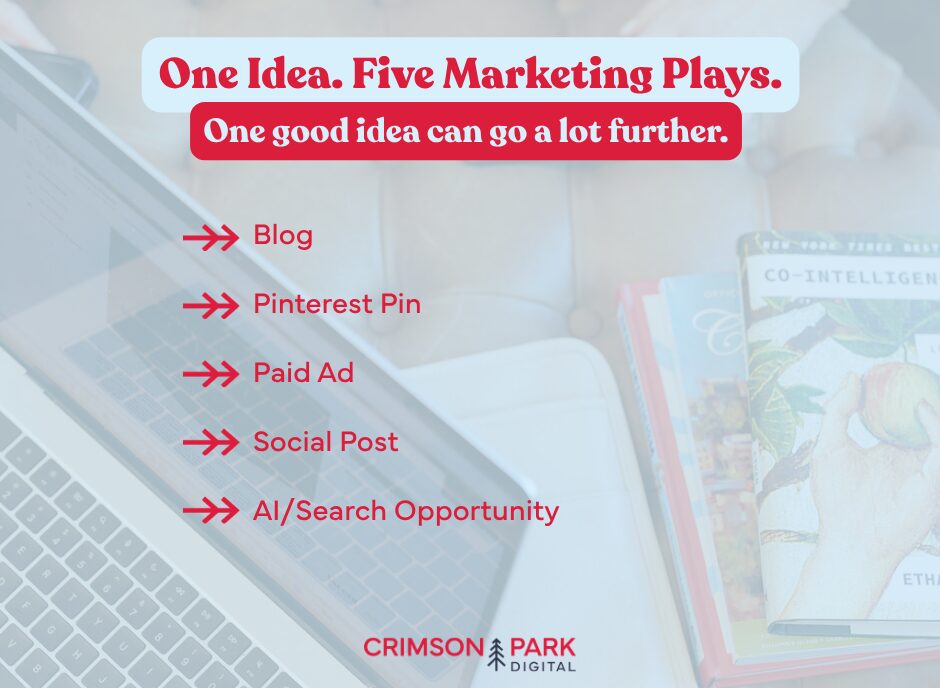
That’s where Pinterest becomes useful beyond Pinterest itself. The insights can feed the larger marketing strategy.
So, Is Pinterest Worth It?
For some brands, absolutely.
For others, it may not be the right use of time or budget. We’re not interested in recommending a channel just to check it off a marketing plan.
The question is whether your audience is using Pinterest, what they’re searching for, and whether your brand has something valuable to contribute.
When those pieces line up, Pinterest can help expand organic visibility, support paid campaigns, drive qualified traffic, and give your marketing team another window into what your audience wants.
And importantly, it doesn’t have to become another disconnected channel your team has to manage.

Why We Believe Integrated Marketing Works Better
This is one of the biggest advantages of working with a boutique agency. Our teams aren’t operating in completely separate silos. We’re close to the work and close to the strategy.
That means the SEO team can see what content is working. Paid media can use those insights. Content can respond to search behavior. Creative can turn those ideas into something people actually want to click. Analytics can help us understand what happened next. We’re in the nitty-gritty together.
And that’s where some of the best marketing ideas come from: not looking at each channel separately, but asking how they can make each other better.
If you’re wondering whether Pinterest could play a bigger role in your marketing strategy, let’s talk!


