
One of the biggest takeaways we took from Advertising Week New York 2026? Some of the best marketing ideas come from places you wouldn’t expect.
Throughout the week, presenters and speakers kept coming back to the importance of thinking outside the box. The brands that stand out aren’t necessarily the ones that follow industry trends most closely. They’re the ones looking beyond their own backyard, borrowing fresh ideas, and rethinking what their audiences expect.
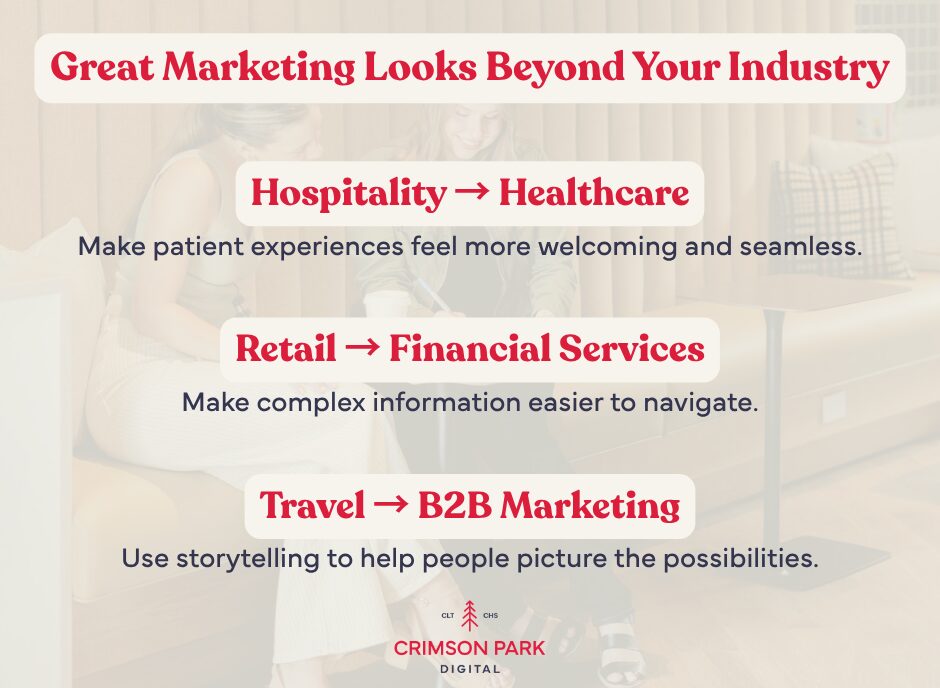
We’re seeing it happen across industries. Healthcare brands are taking notes from hospitality to create better patient experiences. Financial services brands are finding new ways to make complicated topics feel more approachable. And brands across the board are realizing that their customers bring expectations from every other experience in their lives.
Your Industry Isn’t Your Audience
Let’s say you’re a healthcare organization. Your marketing agency knows all the industry buzzwords, keeps tabs on your competitors, and can tell you exactly what other practices are posting on social media. Great! That’s a solid starting point.
But does that mean they understand what your patients actually want?
Patients aren’t just looking for a doctor. They’re looking for reassurance, convenience, clear communication, and an experience that doesn’t add more stress to an already stressful situation.
And those expectations don’t come exclusively from healthcare. They’re shaped by hotels, restaurants, retail brands, and just about every other business people interact with.
Think about checking into a hotel. You expect clear directions, a smooth arrival, and someone who can answer your questions without making you feel like a number. Why should scheduling a doctor’s appointment feel any different?
The opportunity isn’t to make healthcare look like a hotel. It’s about understanding what makes a great hospitality experience and applying those lessons to patient expectations.
The same thinking applies to other industries:
- Financial services: People appreciate the simplicity, personalization, and convenience of their favorite consumer brands. Complex financial topics don’t have to mean complicated digital experiences.
- Travel and tourism: People want more than a list of attractions. They want to picture themselves at a destination and understand why it’s worth visiting.
- B2B services: Business buyers are people, too. Clear communication, useful content, and an easy buying experience still matter.
Your industry tells you what your audience needs. Looking beyond your industry can help you understand how they want to experience it.
The Problem With Following the Competition Too Closely
Competitor research is important. You need to know what’s happening in your space, where other brands are investing, and how your business compares.
But there’s a catch.
When every brand is looking at the same competitors for inspiration, it’s easy for everyone to start sounding the same.
The messaging gets repetitive. The content starts blending together. And before long, your marketing looks a lot like everyone else’s.
Instead of asking only, “What are our competitors doing?” try asking a few different questions:
- What brands are creating experiences our audience genuinely enjoys?
- What makes certain companies easier to understand, remember, or work with?
- What expectations are customers bringing from other industries?
- Where is our industry falling short, and how could we do things differently?
These questions open the door to more creative thinking without chasing every shiny new trend.
The goal isn’t to copy what another brand is doing. It’s to understand why something works and determine whether the underlying idea could work for your audience, too.
Audience Research Goes Beyond Demographics
Knowing your audience’s age, location, income, or job title is useful. But demographics alone won’t tell you why someone chooses your brand over another.
Two people in the same demographic can have completely different priorities.
One patient might want to book an appointment as quickly as possible. Another might need detailed information and reassurance before choosing a provider. One potential client might care most about your expertise, while another wants to know what working with your team will actually feel like.
That’s why effective audience research needs to go deeper.

A strong audience strategy considers:
- Questions and concerns: What are people searching for? What information do they need before making a decision? Customer questions can reveal content opportunities your competitors may be overlooking.
- Motivations and expectations: What matters most to your audience? Convenience, credibility, affordability, personal attention, or something else entirely?
- Digital behavior: How do people find your brand, interact with your content, and move through your website? Search data and website analytics can help identify patterns and friction points.
- Real customer feedback: Reviews, conversations, surveys, and frequently asked questions can reveal how people describe their needs in their own words. That’s valuable insight for more relevant messaging.
When you understand these factors, you can make smarter decisions about your website content, SEO strategy, social media, and overall brand messaging.
You’re no longer creating content simply because it’s a popular topic in your industry. You’re creating it because it addresses something your audience actually cares about.
What Does This Mean for SEO and AI Search?
Understanding your audience isn’t just a creative exercise. It also plays an important role in how people find your brand online.
Traditional search engines and AI-powered search experiences aim to connect people with relevant information. Content that clearly answers real questions, explains complex topics, and demonstrates genuine expertise can help your brand become a more useful resource.
Here’s where audience understanding comes into play:
- Create content around real questions. Think beyond high-volume keywords and consider the specific concerns, comparisons, and decisions your audience is working through.
- Use language people actually understand. Industry terminology has its place, but your content should make sense to the people reading it, not just the professionals writing it.
- Show what makes your brand different. Firsthand expertise, specific examples, useful insights, and original perspectives give people more reasons to engage with your content.
- Connect the dots across channels. Your website, social media, local listings, and other digital touchpoints should reinforce a consistent understanding of who you are and whom you serve.
None of this guarantees rankings or AI citations. Search visibility depends on many factors. But a strategy rooted in genuine audience needs gives your content a clearer purpose than simply publishing another version of what everyone else has already said.
And that’s a much better place to start.
So, Does Your Marketing Agency Really Know Your Audience?
Here’s a quick gut check. Ask yourself:
- Does your agency challenge your assumptions or simply agree with your existing ideas?
- Can they explain why a strategy makes sense for your specific audience, beyond saying it’s what works in your industry?
- Do they bring fresh perspectives to the table?
- Are they connecting audience insights to your broader digital marketing strategy?
If the answers are a little fuzzy, it might be time to look at your marketing from a different angle.
The right digital marketing agency should understand your industry, but it shouldn’t be limited by it. That takes curiosity, research, creative thinking, and the ability to connect insights from different places to build a strategy that makes sense for your business.
You don’t need to reinvent everything. Sometimes, you just need to stop looking at the same things everyone else is.

Ready to Get to Know Your Audience Better?
At Crimson Park Digital, we believe great marketing starts with understanding people, not just industries. Our team connects audience insights with creative thinking, SEO, content, social media, and digital strategy to help brands build stronger connections and stand out in crowded markets.
If your marketing feels a little too familiar, it might be time for a fresh perspective. Let’s talk about how CPD can help you better understand your audience and turn those insights into a smarter digital marketing strategy.


