In reality, paid search is one of the fastest ways to burn through a marketing budget when it’s not handled strategically. We see it all the time. Campaigns running on autopilot, ads showing up for the wrong searches, budgets being spread too thin, and businesses wondering why the numbers look busy, but the phone stays quiet.
Smarter paid search fixes that. It brings intention back into the process and makes sure every click serves a purpose. Our agency lives in this world every day, which means we know where ad dollars tend to disappear and how to make them work harder instead.
Let’s break down what smarter paid search actually looks like, why it matters, and how our agency approaches it differently.
Why Paid Search Gets Messy Fast
Paid search moves quickly. Platforms change, competitors adjust bids, consumer behavior shifts, and suddenly a campaign that worked last quarter feels stale.
Without a clear strategy, paid search turns into guesswork. Budgets creep up. Performance plateaus. Reporting feels confusing instead of helpful.
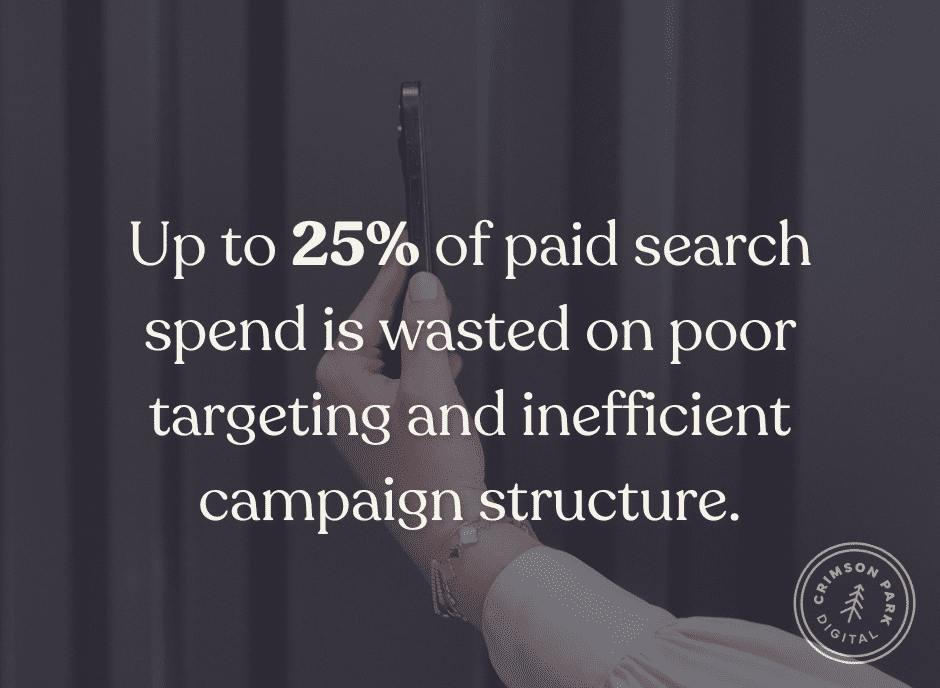
Smarter paid search isn’t about throwing more money at the problem. It’s about tightening the system so ads show up for the right people, at the right moment, with a clear next step.
When done well, paid search becomes predictable, scalable, and aligned with real business goals. When done poorly, it quietly drains your budget one click at a time.
Smarter Paid Search Starts With Real Goals
Every strong paid search campaign starts with clarity. Not vague goals like “more traffic” or “more leads,” but actual business outcomes.
Are you trying to book consultations? Drive online sales? Increase calls for a specific service? Support a seasonal push?
Agencies need to anchor campaigns to these goals from day one. That focus shapes everything else, from keyword selection to bidding strategy to how success gets measured.
Without clear objectives, paid search tends to chase vanity metrics. Clicks look great in reports, but revenue tells a different story. Smarter campaigns keep their eyes on what actually moves the business forward.
Where Data Comes In (And Where It Often Goes Wrong)
Paid search produces a lot of data. Impressions, clicks, quality scores, conversion rates, cost per acquisition. The list goes on. The challenge is knowing what to focus on.
Most successful digital marketing agencies don’t just collect data. They translate it into action. Patterns start to emerge when campaigns are monitored consistently. Certain keywords convert better. Some ads drive traffic, but no action. Others quietly outperform everything else.
This is where wasted spend usually hides. Ads that look fine on the surface but don’t contribute to real results.
Data-driven PPC means adjusting early and often. It’s less about perfection and more about momentum. Test, learn, refine, repeat. Over time, those small improvements add up to big gains.
Campaign Structure Is Not Glamorous, But It Matters
Campaign structure is one of the least exciting parts of paid search yet one of the most important.
Think of it like organizing a closet. When everything has a place, it’s easy to find what you need and spot what’s not working. When it’s chaos, things get lost fast.
Our agency’s paid media experts often spend a lot of time here because structure affects everything, and most internal teams do not have the bandwidth to focus on it. Budget control. Targeting precision. Reporting clarity. Optimization speed.
Clean, intentional campaign structures make it easier to scale what’s working and pause what’s not. It also prevents overlap that drives up costs and dilutes performance.
This is one of those behind-the-scenes details that rarely gets attention but makes a huge difference long term.
Smarter Targeting Means Fewer Wasted Clicks
Not every click is a good click.
One of the biggest mistakes businesses make in paid search is casting too wide a net. Ads are served for searches that technically match keywords but don’t match user intent.
Smart agencies spend a lot of time refining which ads appear, when they should, and for whom. That includes demographics, behaviors, interests, locations, and search intent.
Better targeting does two things. It improves conversion rates and lowers wasted spend. Ads reach people more likely to take action, instead of curious browsers who bounce.
The result feels almost counterintuitive. Fewer clicks, better results.
Creative Matters More Than You Think
Paid search is often treated like a numbers game, but creative plays a big role in performance.
Ad copy sets expectations. It filters out the wrong audience and speaks directly to the right one. Strong creative answers questions before users even click.
Agencies should be testing variations constantly. Headlines, descriptions, calls to action. Small changes can shift performance in a big way.
The goal isn’t clever for the sake of being clever. It’s clarity. When messaging aligns with intent, users feel understood, and conversions follow.
Landing Pages Do Heavy Lifting
Even the best ad can’t save a weak landing page.
Paid search doesn’t end at the click. Where users land matters just as much as how they get there. Pages need to load quickly, communicate value immediately, and make the next step obvious.
Agencies look at the full experience. Ad message to landing page to conversion action. When those pieces work together, performance improves naturally.
When they don’t, budgets get wasted on traffic that never had a real chance to convert.
Optimization Is Ongoing, Not Occasional
One of the biggest differences between agency-managed paid search and DIY campaigns is consistency.
Smarter paid search doesn’t run on autopilot. It’s monitored, adjusted, and refined regularly by subject matter experts. Keywords shift. Competitors change strategies. Platforms roll out updates.
Agencies treat optimization as part of the process, not a one-time task. That rhythm keeps campaigns efficient and responsive.
Over time, strong performers get more budget. Weak areas get fixed or cut. That’s how paid search becomes more predictable and profitable.
Automation Helps, But It’s Not Magic
Automation and AI have changed paid search in a big way. Smart bidding, automated rules, and machine learning can improve efficiency when used correctly. The key phrase there is “when used correctly.”
Agencies know where automation helps and where human strategy still matters. Automation handles speed and scale. Strategy handles direction.
When those two work together, campaigns become more efficient without losing control.
Transparency Builds Trust
Smarter paid search also means clearer reporting.
Our boutique agency focuses on transparency so our clients understand what’s happening and why. Reports aren’t just data dumps. They tell a story about performance, progress, and next steps.
That clarity builds trust and leads to better decisions. When everyone understands what’s working, campaigns evolve faster and more confidently.
Why Businesses Choose to Outsource Paid Search
Paid search looks approachable, but managing it well takes time, experience, and constant attention.
We specialize in this space because the details matter. Structure, targeting, creative, data interpretation, optimization. Miss one piece, and performance suffers.

Outsourcing paid search gives businesses access to systems, insights, and experience that are hard to replicate internally. It also frees up time to focus on running the business instead of managing dashboards.
The Smarter Way Forward
Paid search doesn’t have to feel unpredictable or expensive. With the right strategy, it becomes a growth channel instead of a budget line item you dread reviewing.
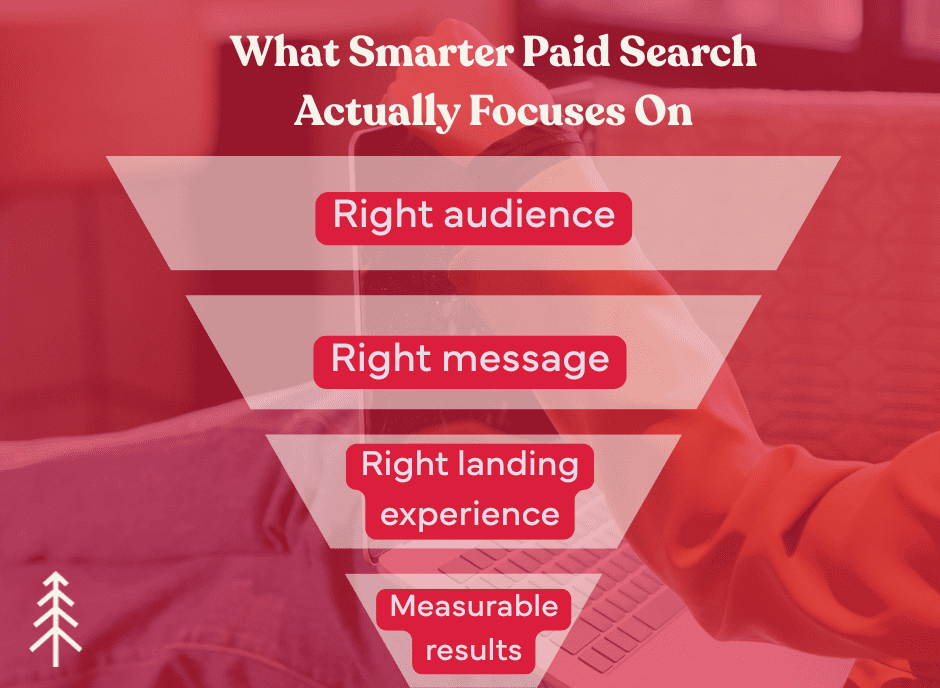
Smarter paid search aligns with real goals, uses data intentionally, prioritizes relevance, and evolves continuously. It’s not about chasing clicks. It’s about building campaigns that actually support the business.
That’s where agencies like Crimson Park Digital come in.
Ready to Stop Wasting Ad Spend?
At Crimson Park Digital, we build paid search strategies that are intentional, efficient, and aligned with real business goals. We handle the complexity so your ad spend works harder and smarter.
If you’re ready to turn paid search into a true growth channel, let’s talk.