
Not every blog post needs to generate a lead to be successful. Expecting every piece of content to produce an immediate conversion is a little like expecting someone to propose on the first date. Could it happen? Sure. Should you build your whole strategy around it? Absolutely not.
Some blogs introduce your brand to new audiences. Others answer questions, build trust, or help potential customers compare options. Each has a role to play.
The real question isn’t whether every blog generates a lead. It’s whether your content helps your business become more visible, useful, and memorable to the right people.
Not Every Reader Is Ready to Become a Customer
Imagine someone Googles a question related to your industry, finds your blog, gets the answer, and leaves. No form submission. No discovery call. No new CRM contact.
Your business still showed up when someone needed information and gave them a reason to remember your brand. Pretty good first impression.
Readers might be researching months before they’re ready to hire an agency, choose a healthcare provider, or purchase a service. They may read your blog today, return through search next month, and eventually reach out when the time is right.
That’s why last-click reporting can make content look less valuable than it actually is. If you only credit the final interaction before a conversion, the blog that introduced someone to your brand may get little (or no) recognition.
No immediate conversion doesn’t automatically mean no impact.
Ways Your Blog Can Deliver Value Without Generating a Lead
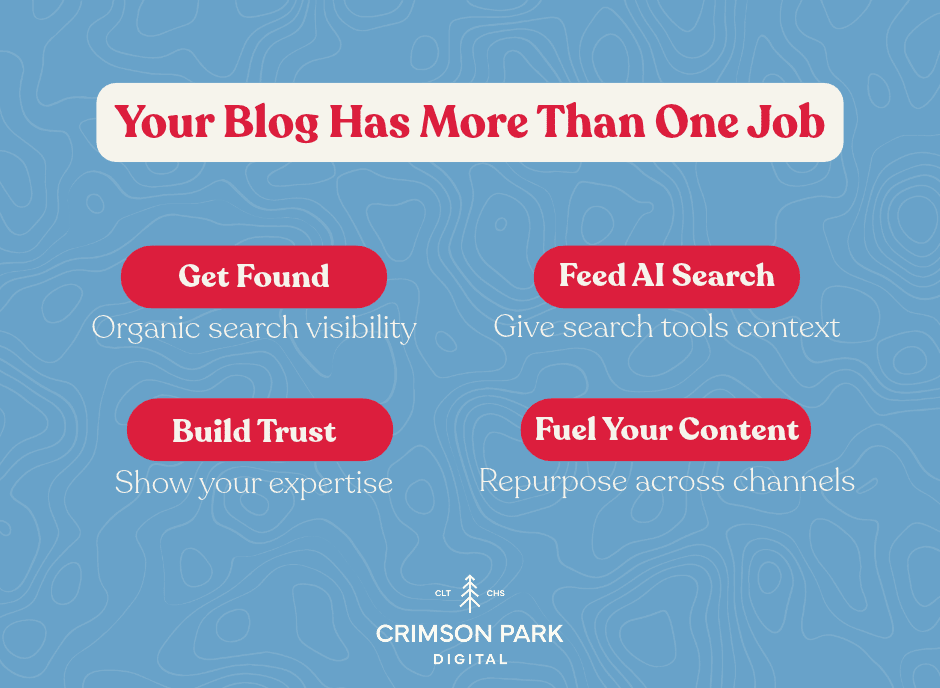
It helps the right people find your brand
Search engine optimization and organic visibility are big reasons businesses invest in content marketing. Helpful blog content gives your website more chances to appear when people search for topics related to your services.
That doesn’t mean publishing 50 articles targeting tiny keyword variations. Focus on useful resources that match search intent and answer relevant questions.
Organic visibility, impressions, and relevant traffic help show whether an article is working. Remember, a smaller audience of potential customers can be more valuable than thousands of visitors who will never need your services.
It builds trust before the sales conversation
People need more than a business saying it’s great at what it does. Helpful content demonstrates expertise and answers questions before a potential customer speaks to your team.
For a healthcare organization, that might mean explaining symptoms or what to expect at an appointment. For a hospitality brand, it could be a guide to planning a trip.
The goal is to give readers something useful instead of asking them to take your word for it. Trust develops over multiple interactions, and generic content or sales pitches dressed up as advice can do the opposite.
It gives search engines and AI tools more context
Search engines and AI-powered search experiences need context to understand what your business does and when your content might answer a question.
Content about SEO, content marketing, local search, and AI search optimization can help clarify a digital agency’s expertise. Clear structure, relevant internal links, and firsthand insights also make content more useful.
No one can guarantee a blog will appear in an AI-generated answer. Helpful content can still support broader search visibility and give people more opportunities to encounter your brand.
It gives your other marketing channels something to work with
Your blog shouldn’t spend its whole life on your website. Turn a useful takeaway into a social post, a misconception into a short video, or a key point into an email newsletter or Reddit conversation.
Repurposing helps you reach people who prefer different formats. Just adapt the idea to each channel instead of pasting the same paragraph everywhere.
It supports the pages that drive conversions
A blog may not generate the lead, but it can help someone find the page that does. A reader might land on an educational article, click through to a related service page, and eventually contact your team.
Relevant internal links help readers find a natural next step while helping search engines understand how your pages relate. Keep those links useful, not pushy.
How Should You Measure Blog Performance?
Start with one question: What was this blog supposed to accomplish?
- Visibility: Review relevant search impressions, clicks, and queries.
- Audience growth: Look at traffic sources and whether visitors fit your target audience.
- Engagement: Check interactions with the content and related pages.
- Conversions: Consider internal-link clicks and assisted conversions where available.
- AI search: Monitor the visibility and referral signals your tools can track.
No single metric tells the whole story. Someone who finds a quick answer and leaves isn’t necessarily a failure, just as someone who spends five minutes on a page isn’t automatically a qualified prospect.
Give content time to gain traction, but review underperforming articles regularly. Look for opportunities to refresh content or improve its connection to your services. Make decisions based on evidence, not panic over one quiet week in analytics.
When Should a Blog Generate Leads?
Blogs absolutely can generate leads, and some should be designed with that goal in mind. Articles for people comparing solutions, evaluating providers, or looking for a specific service may have a more direct path to conversion.
Other posts answer broader questions or introduce a problem. They may attract informational searches and produce fewer immediate inquiries because they’re serving an earlier need.
Your strategy needs room for both. A full content calendar may look productive, but if articles don’t connect to audience needs or business goals, you’re creating activity without direction.
The goal isn’t to make every article sell. It’s to give every article a reason to exist.
Stop Making Every Blog Prove Its Worth in Leads
Your blog doesn’t need to close the deal to contribute to your business. It can help people find your brand, answer questions, build confidence in your expertise, and strengthen organic visibility. Those outcomes may not show up as a conversion number, but they can still support long-term growth.

At Crimson Park Digital, we connect content, SEO, and AI search optimization to a broader organic strategy. Want to make your content work harder without turning every blog into a sales pitch? Let’s talk about your organic strategy.


